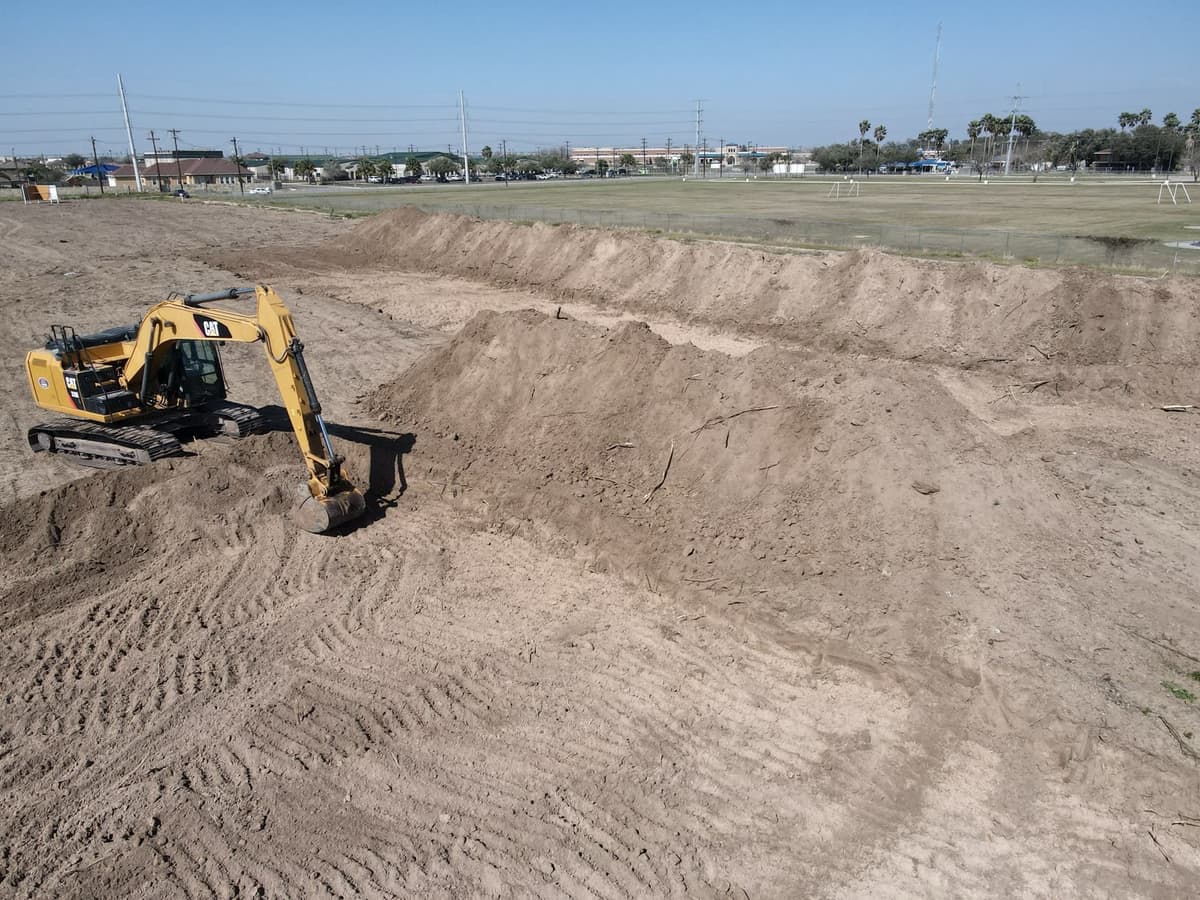
Grading is the work that decides where water goes, and in Houston that is the whole ballgame. The ground is flat, the clay does not drain, and the rain comes in inches per hour. A lot that is graded right sheds water away from the slab and toward the street or a swale. A lot that is graded wrong holds water against the foundation, and the foundation repair costs more than the grading ever would have.
This guide covers what grading costs, the difference between the cheap kind and the expensive kind, and how to make a bid say which one you are getting.
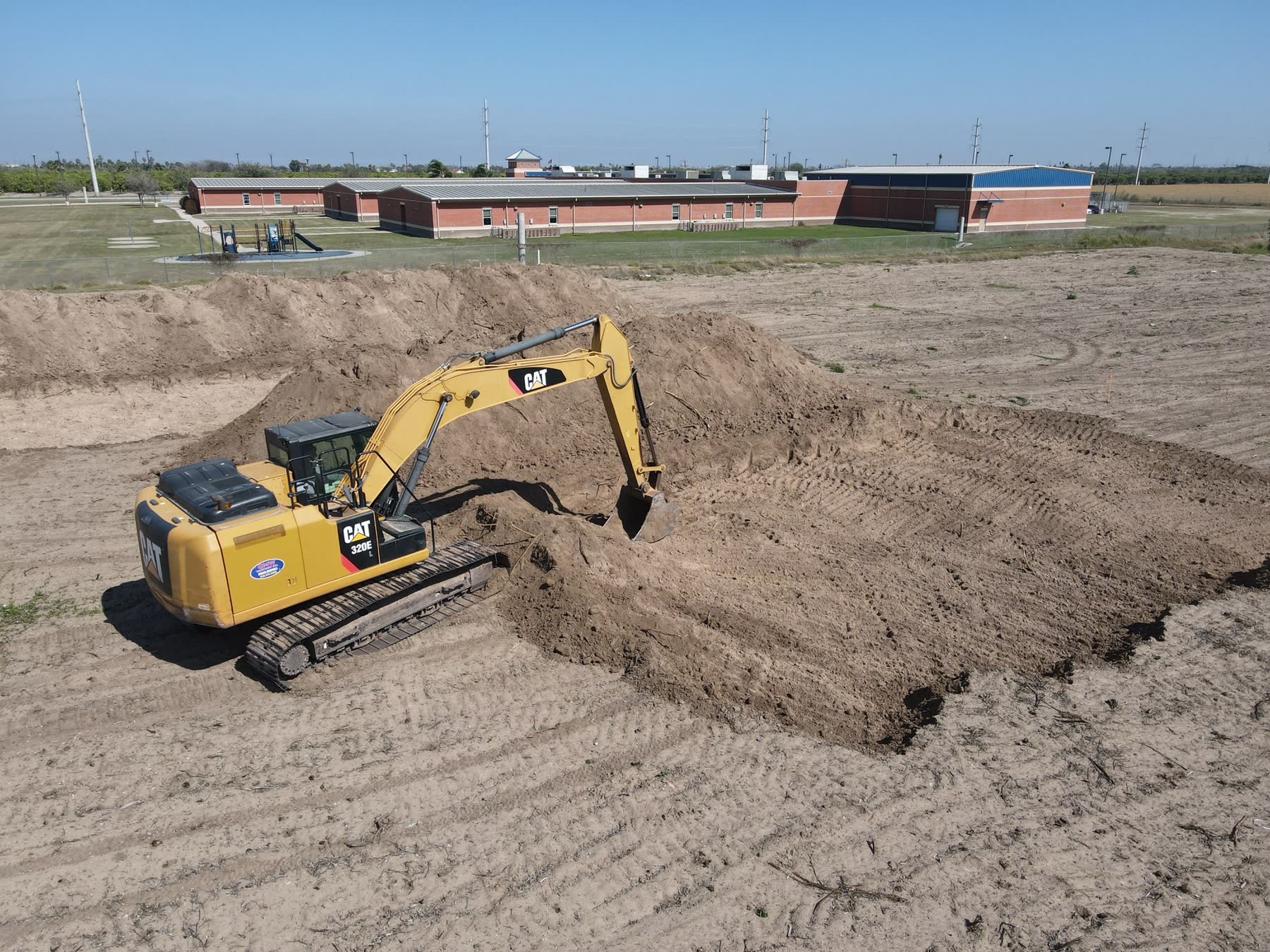
Land Grading Cost Breakdown
What these ranges price: grading an existing site with equipment and operator: fine grading to finish, rough grading to cut, fill and shape for drainage. Clearing, hauling and imported fill are extra.
| Level | Price Range (per sq ft) |
|---|---|
| Fine grading (top few inches, finish for sod or slab) | $0.08 – $1.00 |
| Rough grading (cut and fill, drainage slopes) | $1.00 – $2.00 |
| Whole lot or acreage, all-in (per-acre pricing converted) | $0.36 – $1.02 |
These are national ranges, last reviewed September 2026, from LawnLove's grading guide (updated December 2025: $0.08 to $2.00 per square foot with fine grading at $0.08 to $1.00 and rough grading at $1.00 to $2.00; $15,800 to $44,535 per acre with a $30,000 average; operator and machine $40 to $180 an hour) and CostHelper (operator with a dozer or skid steer $50 to $150 and up an hour; equipment with operator $200 to $1,200 and up a day; worked examples from $350 for a small tractor job to $12,000 for 20,000 square feet with topsoil removal). They are not a study of the Houston market. 365 Builders works statewide; treat these as a starting point, not a quote.
The third row is the same LawnLove figure the other two come from, just expressed in the table's unit: whole-site grading is quoted per acre at $15,800 to $44,535 (about $30,000 average), which is $0.36 to $1.02 a square foot at 43,560 square feet to the acre. It lands below the rough-grading band because a whole site is priced for one mobilization and one continuous pass, while a spot regrade pays for the same machine and operator to move a fraction of the dirt. On acreage, expect the bid itself to be written per acre.
Reading those numbers for a Houston lot:
- A quarter-acre residential lot (about 10,900 square feet) rough-graded for drainage lands in the $11,000 to $22,000 range on the per-square-foot band, less if only part of the lot moves. Most residential jobs are a part-lot regrade, not the whole thing.
- Regrading a yard to drain away from the house runs $835 to $3,000 as a stand-alone project in LawnLove's guide, and leveling a yard $650 to $3,600. That is the most common grading job in Houston and the cheapest fix for a wet slab.
- Hourly work is how small jobs get priced: a skid steer with an operator for a morning is a few hundred dollars.
- Fill dirt is $6 to $17 a cubic yard delivered and topsoil $11 to $53; on a low Houston lot that has to be raised to drain, fill can cost more than the grading.
What Drives the Price Up or Down
1. Fine or rough
Fine grading moves the top inch or three to make a smooth surface for sod, a slab, or a driveway. Rough grading moves real dirt: cutting a high side, filling a low side, building a swale, shaping a pad. Ten times the price per square foot, because it is ten times the dirt. Make sure the bid says which.
2. How much dirt moves, and which way
Cut and fill on the same lot is cheapest: the machine pushes dirt from the high spot to the low spot. Importing fill means trucks, and exporting spoil means trucks and a dump fee. On flat Houston ground, most lots need fill to build a pad that sits above the street, and that is the line to watch.
3. Drainage design
Grading without a plan is guessing with a bulldozer. On a building lot, the drainage plan comes from the site plan or a civil engineer, and it says where the water goes and how steep. On a residential regrade, a contractor who knows Houston will show you the swale on a sketch before the machine arrives. Either way, the plan is what you are paying for; the dirt is incidental.
4. Clearing first
Grading a lot with trees, brush, stumps, or an old slab on it means clearing first, which is its own line and its own price. Our land clearing cost guide covers that.
5. Access and wet ground
A machine that cannot get to the site, or a site that is too wet to work, costs time. Houston clay after a rain is not workable for days. A good contractor schedules around it; a bad one grades mud and leaves you ruts.
6. Permits and erosion control
Grading permits, where required, run from small fees on tiny jobs to several hundred or more on larger ones per CostHelper. On a construction site, silt fence and erosion control are required and are a real line. On a yard regrade in Houston, ask whether the city needs to see it; the answer depends on how much you are moving and whether it changes drainage onto a neighbor.
What a Grading Bid Should Say
- Fine or rough, and the area. Square feet, not "the yard."
- Cut, fill, or both, and where the fill comes from. Imported fill priced per yard.
- The drainage plan. A sketch at minimum: where the high point is, where the water leaves.
- Compaction. A pad for a slab has to be compacted in lifts and, on a building, tested. Fill dumped and spread is not a pad.
- Erosion control, if it is a construction site.
- What happens to the spoil. Hauled off, spread on site, or left in a pile for you to deal with.
Frequently Asked Questions
How long does land grading take?
A residential regrade is usually a day or two of machine work once the ground is dry enough. A building pad with imported fill and compaction testing takes longer, and a full site is part of the development schedule. Weather is the main variable in Houston, and we put the window in writing with the estimate.
Will grading fix water against my foundation?
Often, yes. If water stands at the slab after a rain, the ground around the house is sloped wrong or has settled. Regrading to fall away from the house, sometimes with a swale or a French drain, is the first and cheapest fix. If the slab has already moved, that is a foundation conversation and we will tell you.
Do I need an engineer for grading?
For a yard, no. For a building pad, a drainage plan on a permitted project, or anything that changes how water leaves your lot toward a neighbor or the street, the city will usually want a plan and often an engineer's stamp.
Can I grade my own lot with a rented machine?
You can rent a skid steer for a few hundred dollars a day. What you cannot rent is the eye for grade. The number of yards that drain toward the house after a homeowner "fixed" them with a rental is not small. For a small level-and-smooth job, go for it; for drainage, hire it.
Get a Free Land Grading Estimate in Houston, TX
At 365 Builders, we provide detailed, transparent estimates for land development projects throughout Houston, TX and across Texas. We've been serving the community since 2015, and we stand behind our work. Tell us what the lot is for and send a photo after a rain, and we will tell you whether it is a fine grade, a rough grade, or a drainage problem before we build a number.
Explore our land development services, read our guide to preparing land for building in Texas, see what we do in Houston, or browse all the areas we serve across Texas.
Call us at (956) 607-0470 or request a free quote to get started.