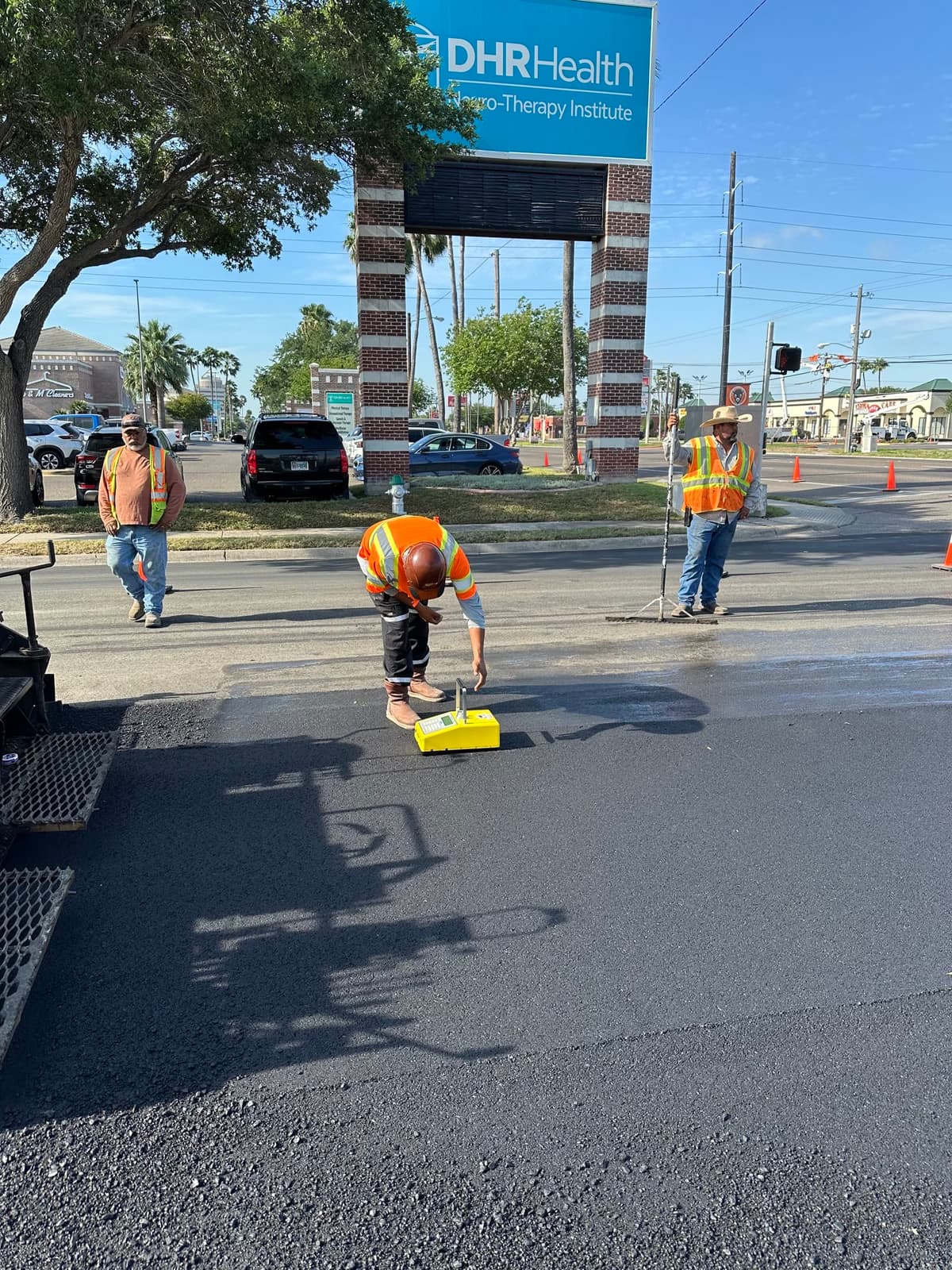
A parking lot is the first thing a customer touches at a commercial property and the last thing most owners budget for. It is also one of the few building components where the cheap version and the right version look identical on the day they are finished. The difference shows up in year three, as alligator cracking and a pothole by the dumpster. This guide covers what asphalt lots cost in 2026, what the bid lines beyond the asphalt actually are, and why in Houston the base and the drainage decide whether you are paving once or twice.
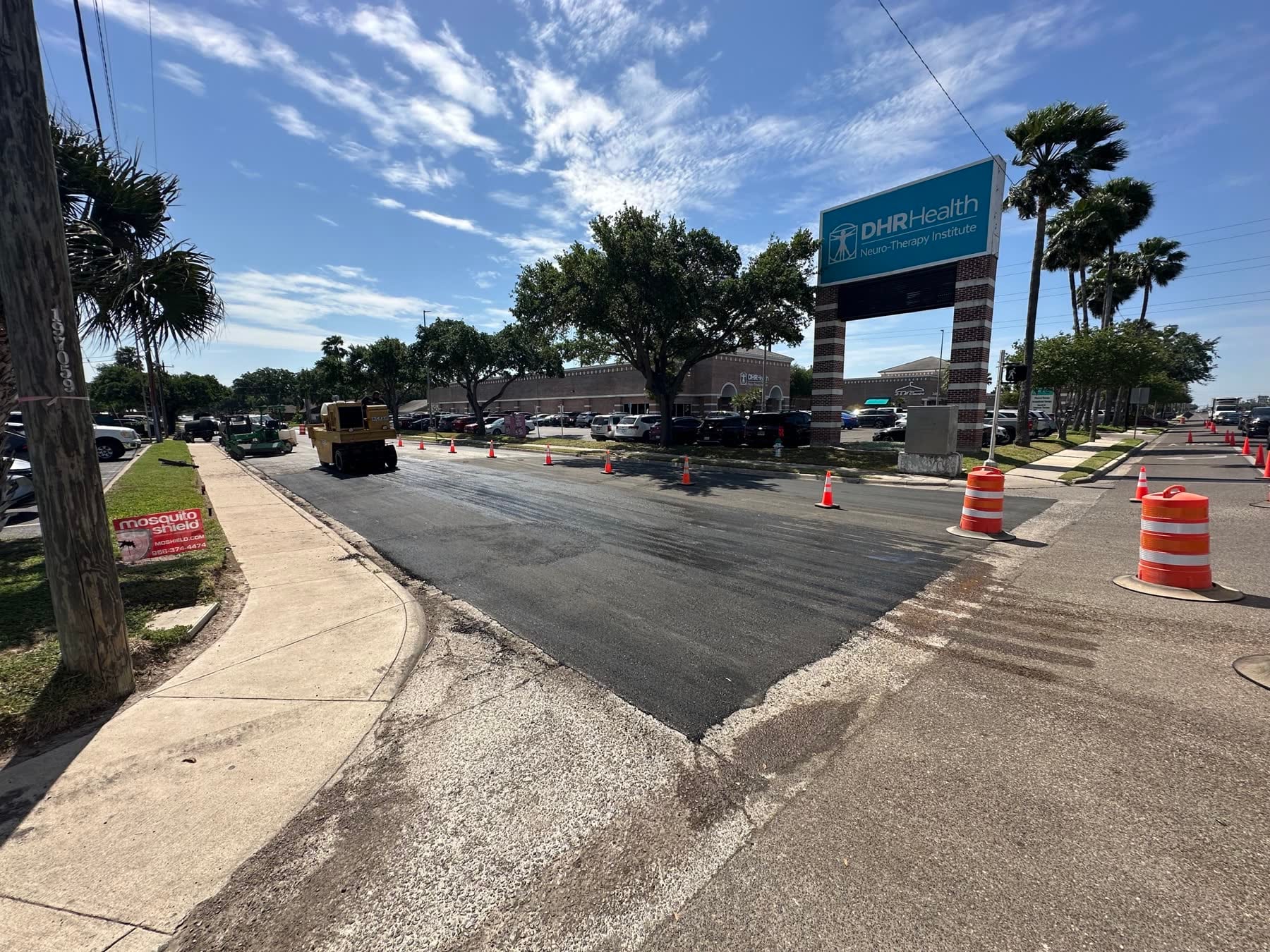
Parking Lot Paving Cost Breakdown
What these ranges price: asphalt parking lot paving: base, asphalt and compaction. Site prep, drainage, sealcoating and striping are separate lines, listed below.
| Level | Price Range (per sq ft) |
|---|---|
| Overlay or resurface of a sound existing lot | $2.50 – $4.50 |
| New asphalt lot on prepared base, standard duty | $3 – $8 |
| Full tear-out and rebuild, or heavy-duty section | $6 – $12 |
These are national and Texas ranges, last reviewed September 2026, consolidated from four paving sources: Asphalt Coatings Company's April 2026 commercial guide (new asphalt $4 to $10 per square foot, $3 to $8 on large lots; resurfacing $2.50 to $4.50), Cojo Excavation & Asphalt's March 2026 guide (new $2.50 to $10 and up; overlay $1 to $5; full tear-out and replace $3 to $12), Tex Pave Experts, a Texas paving contractor (large lots $2.50 to $7; a 10,000 sq ft lot $25,000 to $150,000, typically around $35,000), and a Texas planning range of $2.82 to $6.58 from Wins Parking. They are not a study of the Houston market. 365 Builders works statewide; treat these as a starting point, not a quote.
Put simply: a 20-space lot of about 7,000 square feet runs roughly $17,500 to $70,000 new, per Cojo's worked example, and the spread is almost entirely what is under the asphalt and what the water does.
The Lines That Are Not the Asphalt
From the same 2026 guides. A complete bid has all of them; a low bid is missing some.
- Site preparation: $1.50 to $5 per square foot for clearing, cutting to grade, and compacting subgrade. Cojo puts it at 20 to 30 percent of the total project.
- Aggregate base: roughly $35 per square yard for the crushed stone layer the asphalt sits on. On Houston's gumbo clay, this is not optional and it is not thin.
- Drainage: adds 15 to 30 percent to the base paving cost. Inlets, pipe, a detention area where the city requires one. In Houston it is the difference between a lot and a pond.
- Sealcoating: $0.22 to $0.38 per square foot, every two to three years after the first year. Cheap insurance; skipping it is how a 20-year lot becomes a 10-year lot.
- Striping and markings: $0.20 to $1.00 per linear foot; traffic-grade paint at the upper end.
- ADA compliance: $5,000 to $25,000 and up lot-wide for accessible spaces, aisles, signage and ramps, with individual ramps at $4,000 to $10,000 each. Required on any commercial lot open to the public, and the item most often left out of a "just pave it" bid.
- Stormwater and permitting: before you price a new lot, ask what drainage and detention review the city and county will require for the new impervious surface. It is a design and permitting line that the Texas planning guide puts at 15 to 25 percent of a new lot, and it is easy to leave off a bid.
What Drives the Price Up or Down
1. What is under it
Houston sits on expansive clay that swells and shrinks with the seasons and has no strength when wet. Asphalt is a flexible pavement; it is only as good as the base that carries the load. A lot with six to eight inches of compacted base on stabilized subgrade costs more per square foot and lasts. A lot with two inches of asphalt on scraped dirt is the one with the alligator cracks by the entrance in three years.
2. Thickness and traffic
A lot that sees cars only can be two to three inches of asphalt. A drive lane that sees delivery trucks and a dumpster truck every week needs more, and the truck lane is where every cheap lot fails first. Ask for a thicker section at the dumpster pad and the loading area; it is a small line that saves a big repair.
3. Overlay or rebuild
If the existing lot is structurally sound and the problems are surface cracking and wear, a mill and overlay at the low band is the right answer and a real saving. If the base has failed, an overlay is a two-year cosmetic. A good contractor cores or at least walks the lot and tells you which one you have. If they quote an overlay without looking, be careful.
4. Drainage design
Flat ground and heavy rain make Houston lots hard to drain. A lot that holds water in the low corner is a lot whose base is wet all the time, which is how the base fails. Slope, inlets, and where the water goes should be on the drawing before the price is on the bid.
5. Size and access
Per-square-foot cost drops on large lots because mobilization, the paver, and the roller cost the same for 5,000 feet as for 50,000. A small lot behind a tight building with no room to stage trucks costs more per foot for the same reason.
6. Asphalt prices and the season
Asphalt is an oil product and its price moves with oil. Paving also has a season: hot-mix asphalt has to go down warm and be compacted before it cools, so paving in cool, wet weather is slower and riskier. Houston's long warm season is an advantage here.
How to Read a Parking Lot Bid
- Ask for the section. Inches of asphalt, inches of base, subgrade treatment. Two bids with the same square footage and a $20,000 gap usually differ here.
- Overlay or rebuild, and why. Make the contractor say which and show you the evidence.
- Drainage on the drawing. Slopes, inlets, where the water leaves the property.
- ADA, striping, and sealcoat in or out. All three are separate lines on an honest bid.
- Permits and detention. Who is handling the city, and is the cost in the number.
- Maintenance plan. Sealcoat schedule and crack filling. A contractor who offers one expects to see you again, which is a good sign.
Frequently Asked Questions
How long does parking lot paving take?
Once the base is in and the weather cooperates, paving itself is fast, often a day or two for a typical lot, plus a day before traffic returns. Site prep, base, and drainage work in front of it take longer, and permitting adds to that on new lots. We put the sequence and the closure days in writing with the estimate.
Asphalt or concrete for a Houston parking lot?
Asphalt is cheaper up front, faster to place, and easier to repair; concrete costs more, lasts longer, and handles heavy trucks and heat better. Many Houston lots use both: asphalt for the parking field and concrete at the dumpster pad and truck lanes. Ask for that hybrid if trucks are part of your traffic.
How often should a lot be sealcoated?
Every two to three years after the first year, per the 2026 guides, with crack filling in between. It costs pennies per square foot against dollars to rebuild.
Does a new parking lot in Houston need a permit?
A new lot adds impervious surface, which is what drainage and detention review is about, and any lot open to the public has to meet accessibility rules. Ask the contractor what the city and county will require for your address; they should be pricing and handling it. If a bid says nothing about permits or detention on a new lot, ask.
Get a Free Parking Lot Paving Estimate in Houston, TX
At 365 Builders, we provide detailed, transparent estimates for paving projects throughout Houston, TX and across Texas. We've been serving the community since 2015, and we stand behind our work. Send us the address and a photo of the lot, and we will tell you whether it is an overlay or a rebuild and which band you are in before we build a number.
Explore our paving services, our commercial construction services, see what we do in Houston, or browse all the areas we serve across Texas.
Call us at (956) 607-0470 or request a free quote to get started.