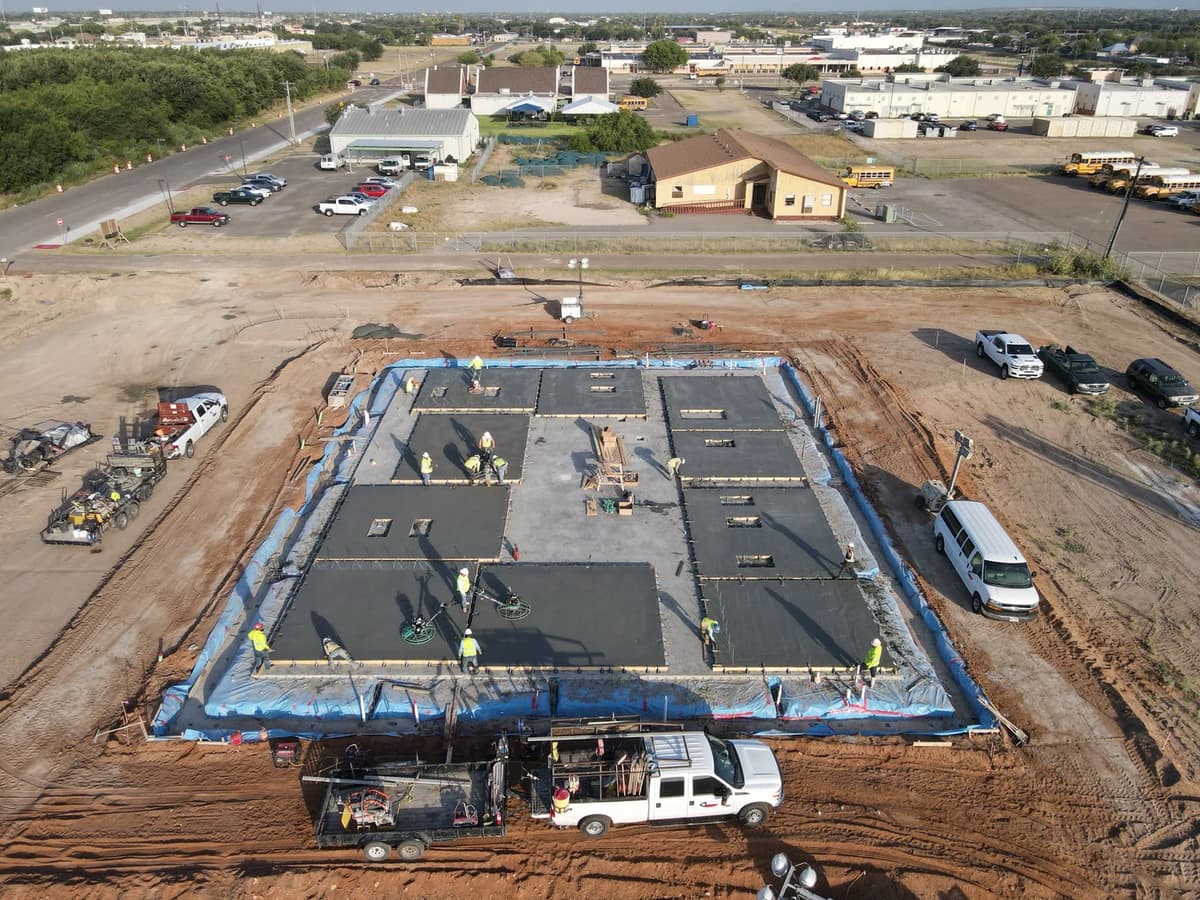
A concrete patio is one of the best return-on-investment outdoor upgrades you can make to an Austin home. It's durable, low-maintenance, and handles Central Texas heat far better than wood decking. But how much should you actually expect to pay?
Here's a straightforward breakdown based on current Austin-area pricing.
Concrete Patio Cost by Finish Type
The cost of a concrete patio in Austin ranges from $8 to $20+ per square foot, depending primarily on the finish you choose. For a typical 400 sq ft patio, that puts total cost between $3,200 and $8,000+.
| Finish Type | Cost per Sq Ft | 400 Sq Ft Patio |
|---|---|---|
| Broom finish (standard) | $8–$12 | $3,200–$4,800 |
| Exposed aggregate | $10–$15 | $4,000–$6,000 |
| Stamped concrete | $12–$18 | $4,800–$7,200 |
| Stained concrete | $10–$16 | $4,000–$6,400 |
| Polished / decorative scored | $15–$22 | $6,000–$8,800 |
These prices include concrete, labor, standard site prep, and basic forming. They do not include significant grading, retaining walls, plumbing for outdoor kitchens, or electrical work — those are separate line items.
Broom Finish
The most affordable and most common option. A broom-finished patio gives a lightly textured, slip-resistant surface that works well for everyday use. It's clean, functional, and takes color well if you decide to stain it later. Best value for budget-conscious homeowners.
Stamped Concrete
Stamped concrete mimics the look of stone, brick, slate, or wood planks at a fraction of the cost of natural materials. It's popular in Austin neighborhoods where homeowners want a high-end look without the maintenance headaches. Expect to pay $12–$18/sqft depending on pattern complexity and whether you add integral color, release agents, or a topical sealer.
Keep in mind that stamped concrete requires periodic resealing — typically every 2–3 years — to maintain its appearance and prevent surface wear.
Stained Concrete
Acid stains or water-based stains are applied to cured concrete to create rich, variegated color. The result is a natural, mottled look that's unique to each slab. Staining works on both new pours and existing patios, making it a great option if you want to refresh an older slab. Cost runs $10–$16/sqft for new pours with staining; staining an existing slab costs $4–$8/sqft.
Polished or Decorative Scored
For a modern, clean aesthetic, polished concrete or scored geometric patterns offer a premium look. This finish is more common in Austin's contemporary and mid-century modern homes. Pricing starts around $15/sqft and can go higher with multiple polish stages or intricate scoring patterns.
Austin-Specific Factors That Affect Cost
Expansive Clay Soil
Much of Austin — especially areas south and east of MoPac — sits on expansive clay soil (also called "black gumbo"). This soil swells when wet and shrinks when dry, creating movement that can crack concrete slabs.
To combat this, your contractor should:
- Compact and prep the subgrade properly before pouring
- Use rebar or fiber mesh reinforcement (rebar is preferred for patios in expansive soil areas)
- Pour to a minimum 4-inch thickness (5–6 inches is better for heavy-use patios)
- Include control joints at proper intervals to direct any cracking to planned locations
On the west side of Austin — Lakeway, Bee Cave, Westlake Hills — the soil transitions to limestone and rocky terrain. This is more stable for concrete but may require rock excavation for grading, which adds $2–$5/sqft to site prep.
Drainage Requirements
Austin has strict stormwater management rules, especially in the Edwards Aquifer Recharge Zone and areas within the Barton Springs Zone. If your property falls in one of these zones (much of southwest Austin, Oak Hill, Dripping Springs corridor), your patio project may trigger additional requirements:
- Impervious cover limits — The City of Austin caps how much of your lot can be covered by non-permeable surfaces. A large patio could push you over the limit
- Drainage plans — You may need to demonstrate that runoff from your patio is managed on-site (French drains, dry creek beds, rain gardens)
- Environmental review — Projects in sensitive zones may require review by the City's Watershed Protection Department
A contractor experienced in Austin residential work will know whether your property is affected and how to navigate the requirements.
HOA Restrictions
Many Austin-area subdivisions — particularly in Cedar Park, Round Rock, Pflugerville, Steiner Ranch, and Circle C — have HOA rules governing patio construction. Common restrictions include:
- Maximum patio size relative to lot size
- Required setbacks from property lines and fences
- Approved materials and colors (some HOAs restrict stamped patterns or bold stain colors)
- Architectural review committee (ARC) approval required before construction begins
Check your HOA guidelines before finalizing plans. ARC approval typically takes 2–4 weeks.
Best Time to Pour Concrete in Austin
Central Texas weather gives you a long pouring season, but timing still matters:
- Best months: October through May — Mild temperatures allow concrete to cure evenly without the stress of extreme heat
- Avoid mid-summer pours when possible — When air temperatures exceed 95°F, concrete cures too fast on the surface, increasing the risk of shrinkage cracks and surface defects. If you must pour in summer, your contractor should use retarding admixtures and cure during early morning hours
- Watch for rain — Concrete needs 24–48 hours of dry weather after pouring. Austin's spring storm season (April–May) can cause scheduling delays
Most contractors see peak demand from March through June and September through November. Booking in the off-season (December–February) may get you shorter lead times and occasionally better pricing.
Do You Need a Permit?
In the City of Austin, a basic concrete patio does not typically require a building permit as long as:
- It's at grade level (not elevated)
- It doesn't involve electrical or plumbing
- It meets setback requirements
- It stays within your property's impervious cover allowance
However, if your patio includes a roof structure, pergola, outdoor kitchen with gas or electric, or drainage modifications, permits will be required. Projects in the Edwards Aquifer zones may also need environmental permits regardless of scope.
If you're in an ETJ (extra-territorial jurisdiction) area like Dripping Springs, Buda, or Kyle, permit requirements vary by jurisdiction. Your contractor should verify what's needed before work begins.
What to Expect From Your Contractor
A quality concrete patio job in Austin should include:
- Site visit and measurement before quoting — not a price over the phone
- Written proposal with itemized costs (concrete, forming, reinforcement, finish, sealing)
- Subgrade preparation — compaction, gravel base if needed, proper grading for drainage (minimum 1/8 inch per foot slope away from your home)
- Reinforcement — Rebar grid or heavy-gauge wire mesh, not just fiber mix alone
- Proper curing — Wet curing or curing compound application for at least 7 days
- Control joints cut within 24 hours of pouring
- Clean site and haul-off of all debris
Ask about warranties. Most reputable contractors offer 1–2 years on workmanship, and the concrete itself should last 25+ years with proper maintenance.
Get a Quote for Your Austin Patio Project
Whether you're pouring a simple slab in South Austin or building a full stamped patio with an outdoor kitchen in Round Rock, accurate pricing starts with understanding your site and your goals.
365 Builders delivers quality concrete work across Texas — from straightforward patio pours to complex decorative flatwork. Call us at (956) 607-0470 to schedule a site visit and get a detailed estimate.